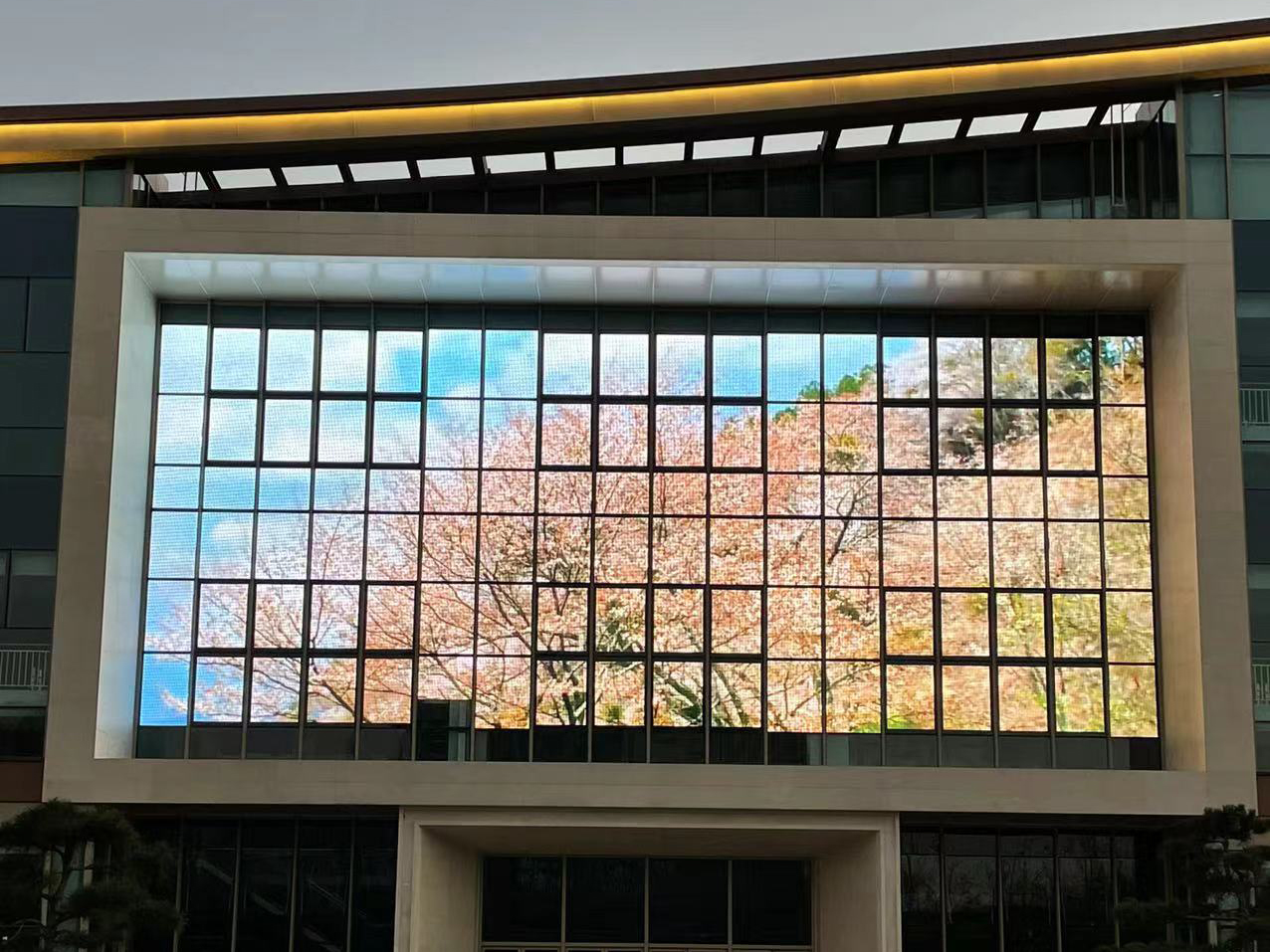
What You’re Seeing is the Entire Cityscape: How LED Film Screen is Redefining Media ArchitectureFor a decade, I’ve been sticking LED film screen onto glass, and I’ll tell you this: we’re not just installing displays anymore. We’re weaving a new kind of urban fabric. The building itself has become the storyteller.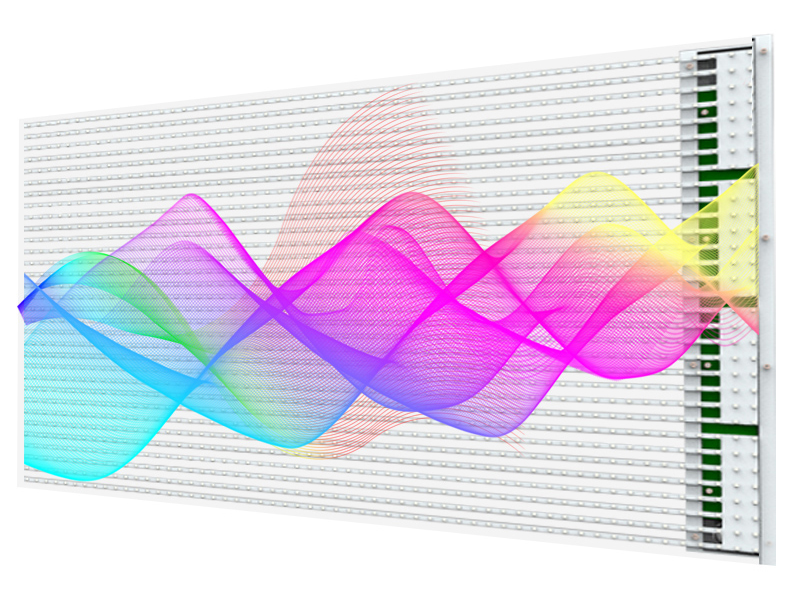 The Invisible Display: Why Great Media Architecture Must Begin with TransparencyLet’s get one thing straight early: true media architecture can’t look like a giant TV strapped to a building. That’s just a big outdoor ad. Real integration starts with invisibility. I remember a job on a financial district tower in 2023. The architect was dead set against anything that would compromise his glass-box vision. When we showed him a sample of a P10 LED film screen—10mm pixel pitch, over 70% transparency, weighing just 3.5 kilograms per square meter—he ran his hand over the glass, felt the surface-mounted LEDs barely thicker than a coin, and finally nodded. The 1,200-square-meter installation vanished into the facade. When off, it’s just a slightly tinted window. That’s the whole point: the medium disappears, leaving only the message and the architecture intact.Day for Living, Night for Dreaming: The Dual-Life Identity of a Film Screen FacadeHere’s a fundamental truth most spec sheets won’t tell you: a building has two completely different lives, and your LED film screen must serve both impeccably. During the day, that glass facade is a functional envelope—it lets in natural light, provides views for the people inside, and maintains the building’s corporate dignity. We spec a brightness of at least 6,000 nits to ensure content cuts through direct sunlight, but the real engineering feat is transparency. The human eye naturally focuses on the illuminated content, ignoring the 70% open areas between the LED strips. One project manager at a mixed-use development in Singapore put it best: “My office tenants don’t know it’s there until 7 PM. Then, the whole tower wakes up.” At night, with interior lights off, the same facade transforms into a beacon with a perceived resolution far exceeding its actual pixel pitch, delivering a 4K-equivalent visual punch at a fraction of the cost.
 From Landmark to Background: When the Entire Urban Fabric Becomes the MediaWe’ve moved past the era of the single iconic showpiece building. The real revolution is the shift from landmark to background, where entire districts become a synchronized canvas. I’m currently consulting on a waterfront master plan that connects 11 separate structures—hotels, a convention center, retail podiums—via a shared media server network. Each building wears its own LED film screen, and together they form a 1.2-kilometer-long fragmented narrative screen. The technical backbone is a distributed node system: each building runs an independent NovaStar processor synchronized via GPS-timecode, so a ripple of light can cascade across the entire waterfront with less than 3 milliseconds of inter-building latency. This isn’t about one building screaming for attention; it’s about an entire cityscape breathing together, creating a shared visual rhythm that defines the place’s identity.Beyond Advertising: How the Building Skin Becomes a Civic StorytellerLet’s be honest with ourselves: if all we do with this technology is sell soda, we’ve failed. The real power of an LED film screen facade lies in its capacity for civic storytelling. I’ve seen this shift firsthand. During a major city anniversary celebration, the building we outfitted didn’t run a single commercial. Instead, it visualized real-time air quality data as an undulating light sculpture, then switched to displaying crowd-sourced photos of the city’s residents. People stood in the plaza, seeing their own faces woven into the building’s skin. Another time, for an international summit, the facade acted as a live translator, displaying key dialogue in real-time against a visual backdrop of the visiting nation’s landscape. A recent study from the MIT Media Lab suggests this type of dynamic, non-commercial urban media generates 40% longer dwell time than fixed advertising. The building stops being a corporate totem and starts becoming a shared public hearth, a place where the city talks to itself.The Carbon-Conscious Glow: Reconciling Media Architecture with Green Building GoalsYou can’t have this conversation in 2026 without tackling the elephant in the server room: energy. An architect challenged me point-blank last month: “I’m not putting a 100-kilowatt power drain on my LEED Platinum building.” Fair. Here are the hard numbers from a 600-square-meter installation we monitored over 12 months. A traditional outdoor SMD screen of that size draws an average of 180 watts per square meter at full white. Our current-generation LED film screen, using flip-chip driver ICs and common-cathode architecture, pulls just 95 watts per square meter. At typical advertising brightness (not the retina-searing full white), consumption drops to around 55 watts per square meter. Over a year of 6-hour nightly operation, that’s a saving of over 82 megawatt-hours on this single project. We’ve also integrated photovoltaic glass panels into the spandrel areas of one facade, which offset approximately 35% of the display’s annual consumption. The screen must contribute to the city’s beauty, not its carbon debt. With smart scheduling and sensor-driven adaptive brightness, we’re getting there—and those numbers make it into every sustainability report I help write.
FAQ Section
What exactly is an LED film screen, and how does it attach to a glass facade?
An LED film screen is a lightweight, flexible transparent display, typically weighing just 3.5 kg per square meter. It uses optically clear adhesive to bond directly to the interior of a glass curtain wall, turning the existing window into a media surface without heavy structural changes.
How transparent is an LED film screen? Can people inside still see out?
The most common model, a P10 LED film screen, achieves over 70% transparency. During the day, the human eye naturally focuses on the illuminated content while looking through the open areas between the LED strips, so office workers enjoy uninterrupted outward views and natural light.
Is an LED film screen bright enough to use in direct sunlight on a skyscraper?
Yes. We specify a minimum brightness of 6,000 nits for sun-facing facades. This high output, combined with the screen’s native transparency, ensures video content remains crisp and visible even under noon sunlight, without washing out completely.
How much power does a building-media LED film screen really consume?
Real-world monitored data from a 600-square-meter installation shows an average consumption of only 55 watts per square meter at typical advertising brightness. This is significantly lower than traditional outdoor LED panels, and we have successfully integrated photovoltaic glass to offset approximately 35% of the screen’s annual energy use.
Can multiple buildings be linked together with LED film screen for a synchronized show?
Absolutely. We use a distributed node system with each building running an independent processor, synchronized via GPS-timecode. This creates inter-building latency of less than 3 milliseconds, allowing a ripple of light to cascade across an entire waterfront of 1.2 kilometers without a single frame out of sync.
What is the biggest engineering challenge when installing LED film screen on a high-rise?
The two persistent challenges are concealed cabling and wind resistance. All power and data cables must be routed in color-matched, slim-line trunking along the mullions to remain invisible. Furthermore, any installation above three meters in height requires a custom-designed wind-resistance structure to prevent the film from acting as a sail in storms.
Call to Action
Ready to turn your glass envelope into a living, breathing part of the city’s story? Talk to our facade integration engineers today for a free wind-load assessment and media server schematic for your project.